Findings
Francesca Woodman was certainly an enigma and unfortunately passed away at the young age of 22, after committing suicide by throwing herself out of a loft window in New York City in 1981. It is understood that her face was unrecognisable and she was ultimately identified by her clothing. She had spent her years doing mainly self portrait photographic work in both New York and Rome, Italy. She studied both in Italy and Rhode Island, where she produced some of her most emphatic work. She had also spent a large amount of time in Italy during childhood years and was fluent in Italian. Her parents were also artists, with her father being a painter and her mother working in pottery. Woodman took her first self portrait at age thirteen and continued to do so throughout her life and journey in photography.
Upon looking more closely at Woodman’s work it is clear she was a prodigious talent. Her work still stands up today and is perhaps more vital now in the age of the selfie and the vanity laiden instagram feed. While she used various techniques in her images she predominantly shot with a medium format camera producing mainly 6cm x 6cm square negatives. A lot of her later work was “studio” based where she used old abandoned buildings to shoot her self portraits, often she was scantily clothed and used movement and slow shutter speeds to create blur and hide details of herself.
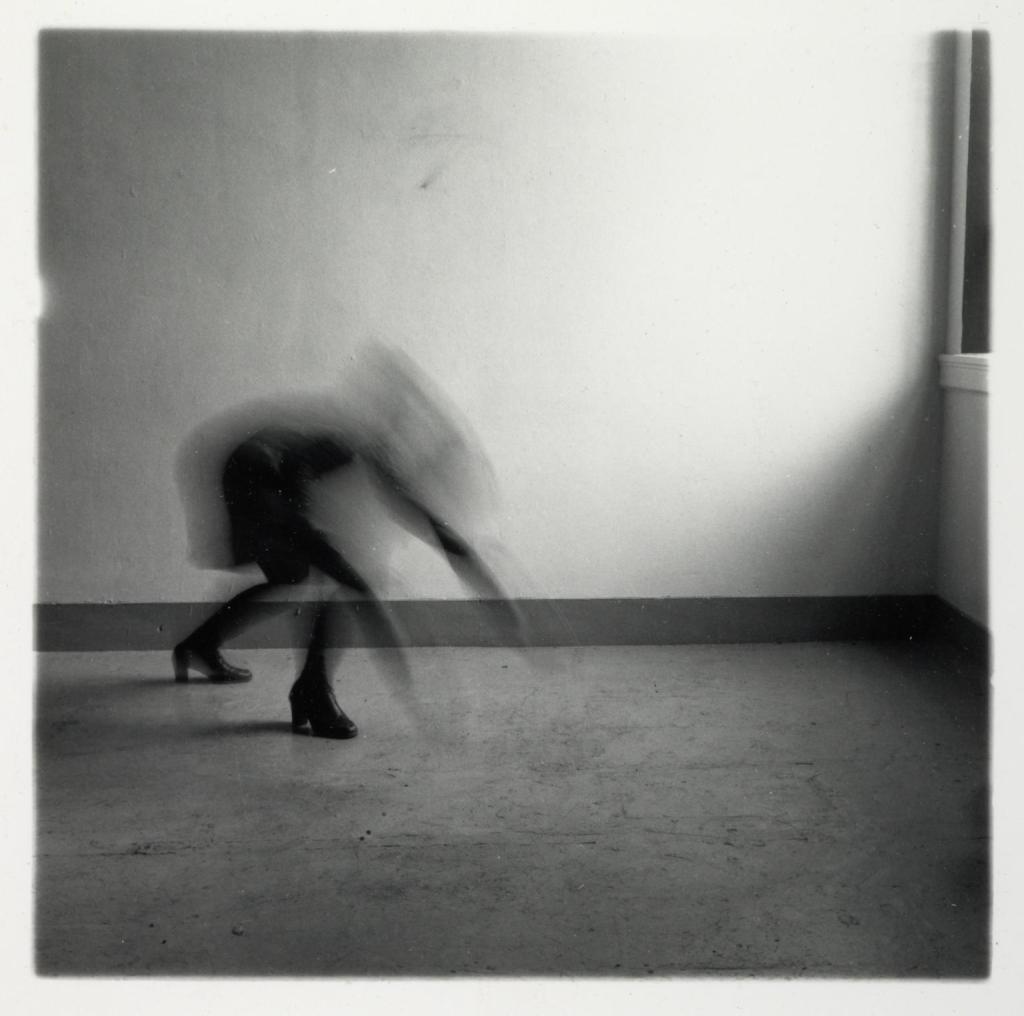
This image was taken at Woodman’s studio on Rhode Island and show her use of slow shutters as she gestures toward what looks to be a window in the corner of the room. Woodman’s moment is so that she becomes unrecognisable, yet her feet remain firmly planted and in focus.
Conclusion
It seems that Woodman’s unfortunate demise was largely down to her work not being as critically acclaimed and lauded as she wanted or felt she deserved. This I believe was not only down to accompanying public acclaim but I personally believe she did not feel as appreciated as an artist by her own family. After watching the documentary on The Woodman’s (see YouTube reference) it is clear today that her parents still jostle for critical acclaim and its notoriety, and in particular would not want the attention of Francesca’s work to detract from their own. It is also clear that Woodman was at her happiest when creating her work, and that photography was her way of expressing herself and her demons. Was she in a state of depression, a troubled state of mind? Well quite clearly I would say yes, anyone who chooses to through away such talent in such dramatic fashion must be a fairly loose cannon. It is also known that she was diagnosed with depression after a failed first suicide attempt, and was placed in the care of her parents after this. She was prescribed anti-depressants and in time most people felt she was on the mend, yet close friends still saw an alarming turn in her emotional state in the days leading to her death.
Francesca Woodman’s work is startlingly oblique and almost bordering on morbid as Woodman portrays herself almost shrinking away into corners of rooms, abandoned and isolated in desolate buildings. The movement blur serves to add to the sadness she cannot perhaps escape, her brain twisting and contorting her body into a whirling mess of inadequate emotion. Why she felt like this will be open for much debate, but it can also be observed that when she was growing up her parents spent much of their time on their respective projects, with everyday being a “creative day”, and maybe she felt inadequate due to this from a young age. Perhaps she felt left aside, slightly unloved and emotionally malnourished. When she finally began to express herself in a truly artistic fashion was she greeted with feelings of wonderment from her artistically (struggling) parents? Did she feel that her work would finally give her the attention, not only from peers, friends and the public she so craved, but also that of her parents? Whether I am right or wrong we will never know, but for me I have seen and researched enough to come to the conclusion that her work was that of a tortured artist, indeed a “troubled mind”. Her work is eery, scary, desolate, unique, evocative, provocative and more often that not filled with feelings of isolation, despair and loneliness. Her work was a diary of how she felt, how she wanted to portray her own personal thoughts and feelings. I don’t often clearly see happiness in her images although she was obviously very happy in the making of them. This was Francesca Woodman’s world as she saw it, and her gratification came from being able to interpret and reflect that in her photography. In some of her videos that go behind the scenes to her images, she can be heard laughing loudly and speaking ecstatically when things come out as she had envisioned. Her happiness was finally having her voice, her opportunity to be heard, her time, finally. I can almost hear her sigh with relief. Unfortunately it seems that the interest and admiration for her artistic qualities and talent came all to late. To concur, it is often genius is saddled with great torment and this is very much the case with Francesca Woodman. Why she was quite so troubled will certainly never be fully understood.
Response
In response to Woodman’s work I took some images at home of corners and other abstract scenes to get a better taste for how the affect and are affected by the photograph. Stains, cracks and debris are all left unadulterated in the shots. It is safe to say two young children our own home has been slightly “abandoned”.
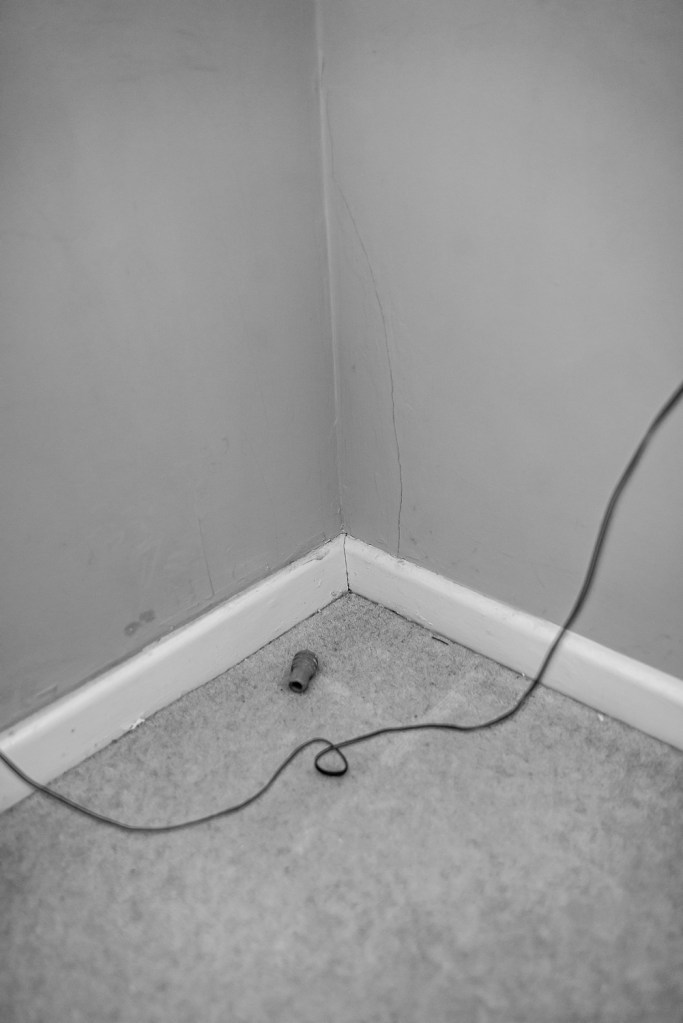
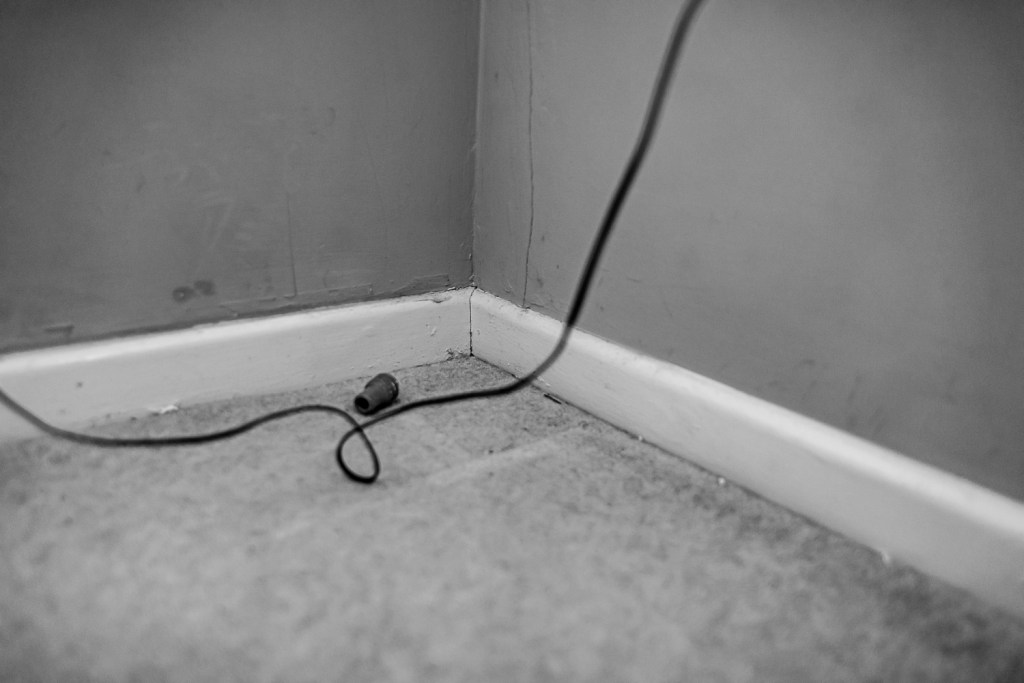
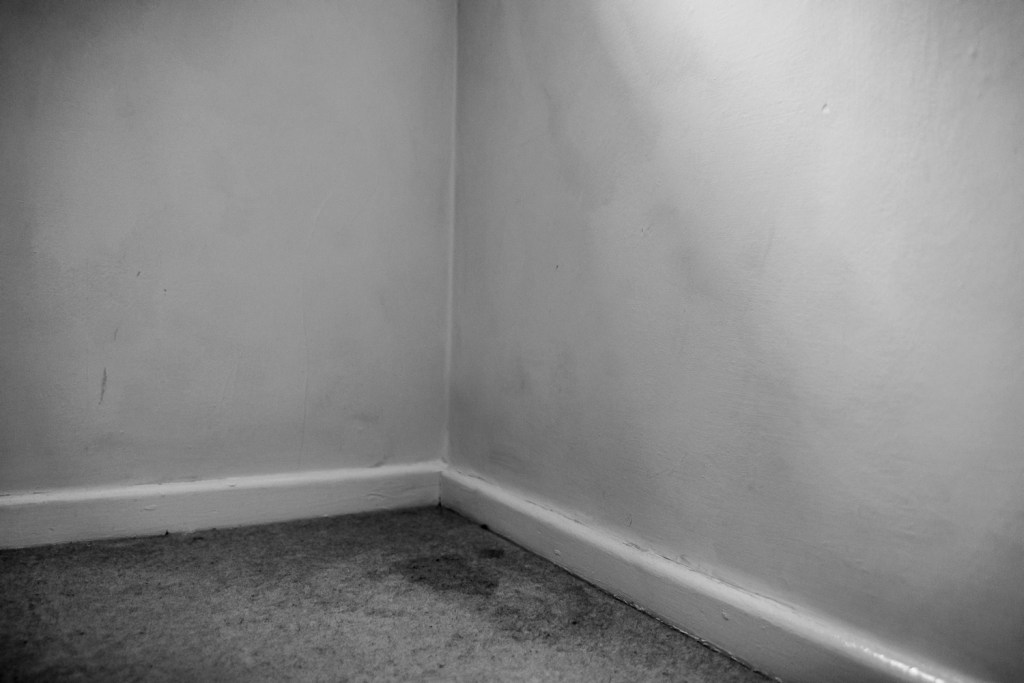
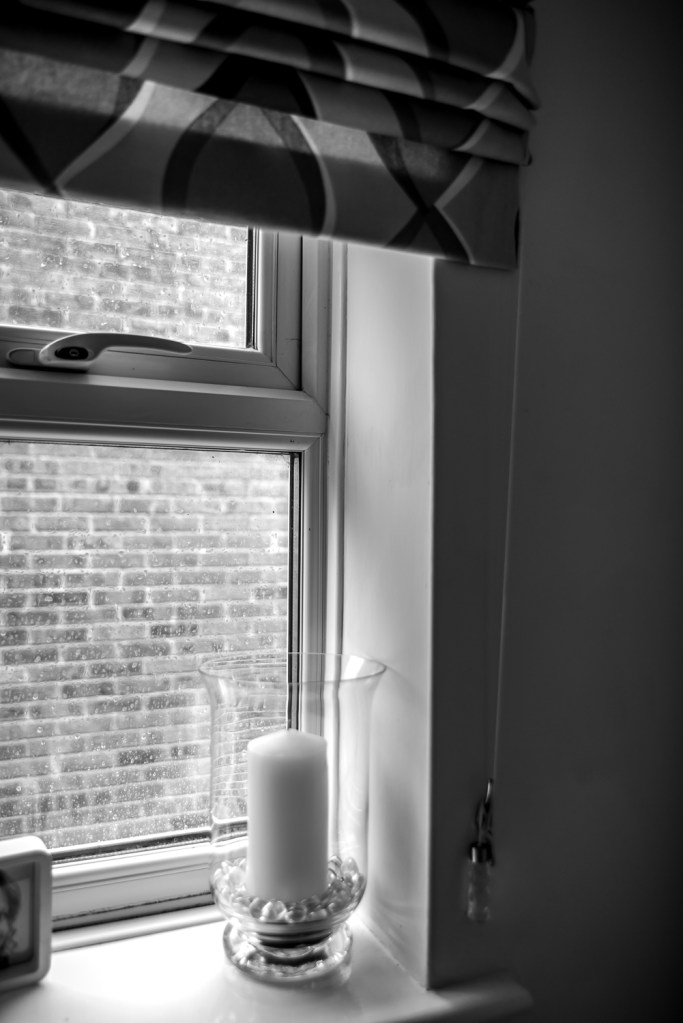

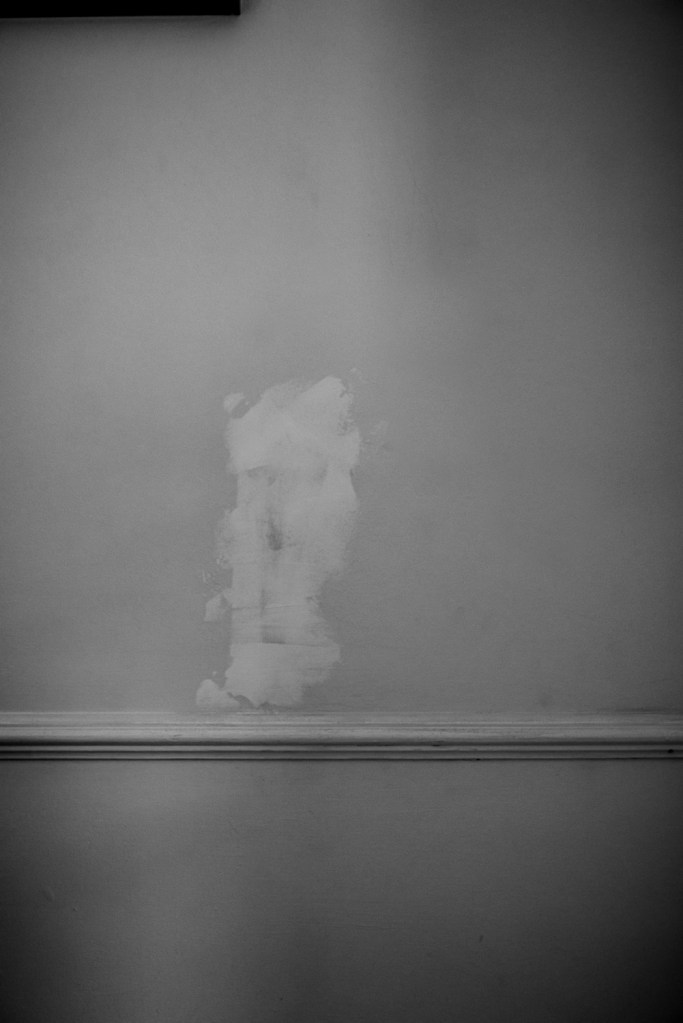
I have deliberately left the noise on these images (ISO 640) as to add to the dynamic of these black shots. Its clear that the camera picks up minute detail and corners of any room seem to have an eerie like presence which is exasperated by the still image. This is obviously something that Woodman notice early on and used to dramatic effect as she often withdrew her persona into these tiny crevices of the rooms she used. It is also clear the two dimensional aesthetic of the camera enlarges the size of the corner, flattening and lengthening it adding quite enormously to its enigmatic personality. This is particularly true when shooting landscape. I have left small unidentifiable elements in the frames which serve to add to their mystique.
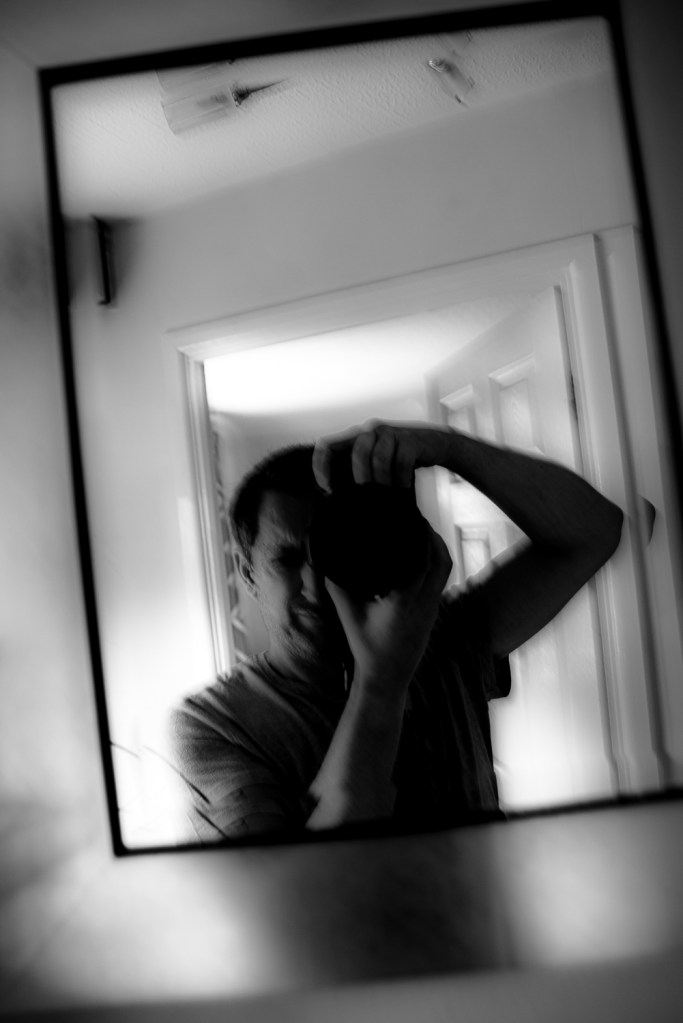
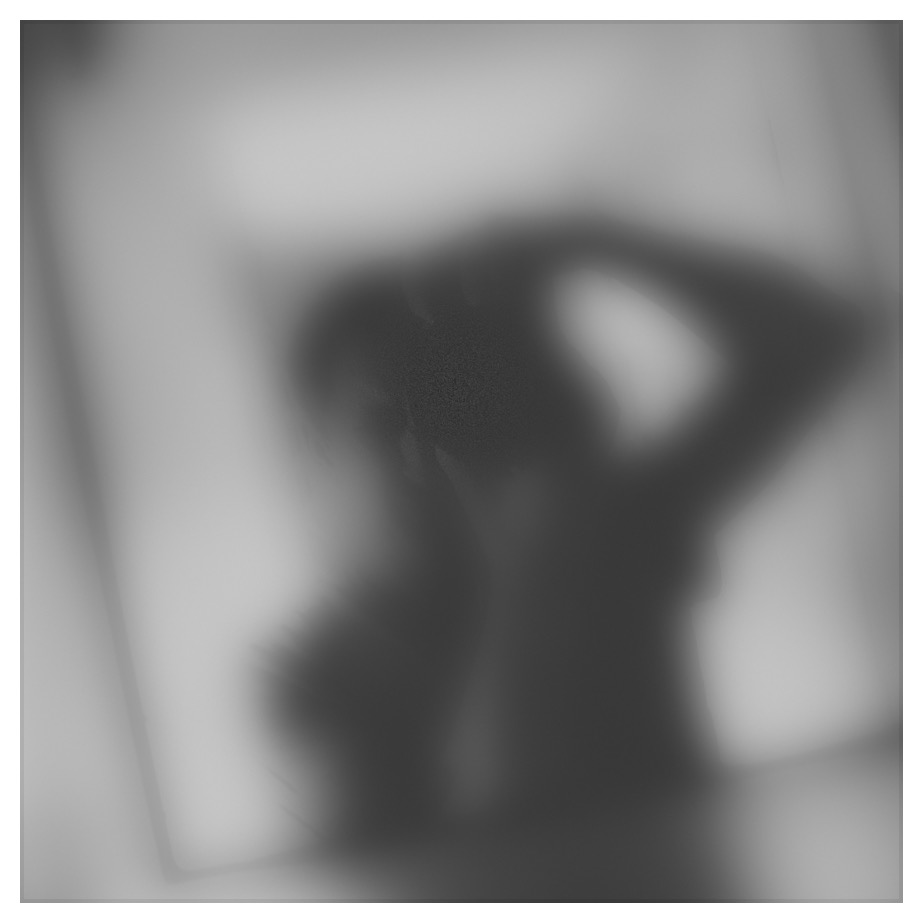
A slow shutter here of 1/8th sec causes natural camera shake and movement which enhances a purely experimental image. I tilted the frame in process to add a more “frantic” feel to the shot which again enhances the feeling of quick movement. This is something Woodman used to good effect in her work often producing a lot more movement and blur but always having a definite point go focus. I think this also highlights her feelings of wanting to reveal herself in a different form, almost becoming how she feels in the frame, completely devoid of human aesthetics but a more complete depiction of emotion. Below is a further edit in Photoshop where I added more blur, subtle grain and fade to dramatise the effect. I also edited this into a square format.
References
Reference – (ONLINE) https://www.guggenheim.org/exhibition/francesca-woodman (accessed 11.06.20)
Reference – (ONLINE) https://www.tate.org.uk/art/artists/francesca-woodman-10512 (accessed 11.06.20)
Reference – (ONLINE) https://www.youtube.com/watch?v=OM3uBw5_voY (accessed 11.06.20)
Reference – (ONLINE) https://www.youtube.com/watch?v=5zqNUdtCwkU (accessed 11.06.20)
Reference – (ONLINE) https://www.tate.org.uk/art/artworks/woodman-space-providence-rhode-island-ar00350 (accessed 17.06.20)
 Dan Towell OCA Context and Narrative