Nigel Shafran
Nigel Shafran’s interpretation of what is quite obviously a mundane scene returns much to the viewer in the way of information. Without the accompanying text it is difficult for the viewer to predict the meaning behind most of the images, yet the dialogue refers to the bigger picture if you will. They portray a narrative that is part of all our daily lives yet one that we often overlook in terms of its impact on us on a daily basis. I for one know that this period of the day can be a stressful one, and one which is shared most of the time between and my wife. “Washing Up” has a multitude of effect in terms of mood and emotion and can often be a boiling point in many a household. That being said Shafran’s body of work here seems to paint a much calmer, lighthearted feeling. Perhaps if the washing up was pictured in its dirty state it would lead the viewer to draw very different conclusions.
In terms of gender when reading a photograph and indeed creating one or a series, I guess that differences would not be initially apparent. For example if I did not know that Shafran had taken these images, would I be able to define the gender of the photographer? I highly doubt it, if anything I would probably say that this would be the work of a female photographer, and that is by no means sexist, but it is different how we see things within the household. When reading an image as a man it could be said we are drawn to different aspects of an image, perhaps seeing things in a different order. This could eventually lead to a very different interpretation of an image. A female photographer may not perhaps be as bullish as a man when creating an image, perhaps drawn to something which inherently appeals to the more feminine side. Ultimately for me I don’t see this as particularly relevant, and I don’t see myself as reading or creating images in a masculine way. It is just personal vision and opinion which shapes both, and one with a more feminine side may equate to a different style, but that style will be just as relevant to the individual.
By taking away people in the images Shafran removes the busyness of the scene and deploys a calm and reflective set of images. I still envision people in the scene, and this almost completes the picture. I can see a quite content individual sitting calmly at the dinner table looking at (in this instance) his work and reflecting on a job well done. This in turn suggests feelings of empathy toward the household and the respect that we have for each other when we mull over our busy lives. I think the removal of people within in the shots actually adds to the dynamism of the images, it helps to evoke the feelings one would assume the photographer intended.
It is interesting to think of this set of images as still life, personally I would normally associate images without text as still life. Also the action within the frame, the metaphorical scene of “washing up” almost instantly clarifies the associated movement that happened inside or outside the frame. The removal of text, descriptive title and suddenly these images become still life as we would normally associate. A title such as “Home Views” would relate too a portrayal of still life scenes within the household. The impetus of washing up and how we go about it in a busy household provides that sense of movement. A vague but interesting juxtaposition.
The below images are for artistic reference only.
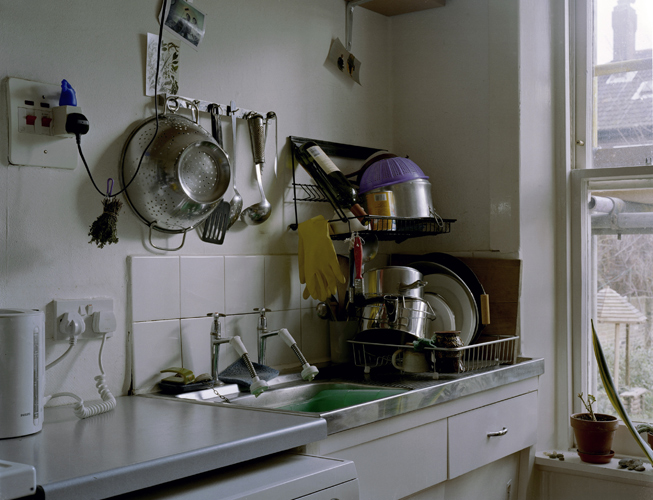
A nicely composed scene here with clever cropping leaving enough of the outside world in the frame. A tidy work surface and draining washing up gloves all add the feeling of conscientiousness. Something that could be portrayed quite differently is depicted in a very uniform and clean manner.
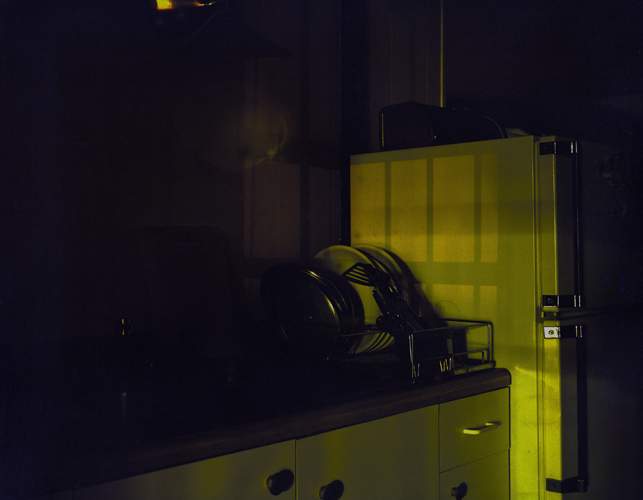
A beautiful image above and a intriguing use of light. Fragments of washing up are places alongside the reflected window pane, which captures the soft warm glow of low sunshine.
The two underlying characteristics I can take away form this set of images if the fundamental use of light and composition. Such a banal and mundane scene would perhaps be assumed as impossible to photograph, but with the photographically intelligent use of both, the images have both a sublime aesthetic and narrative.
References
Reference – (ONLINE) – Nigel Shafran – http://nigelshafran.com/interview-with-charlotte-cotton-edited-photographs/ (last accessed 22/6/20)
Reference – (ONLINE) Nigel Shafran – http://nigelshafran.com/category/washing-up-2000-2000/ (last accessed 22/6/20)
Reference – (ONLINE) Nigel Shafran – http://nigelshafran.com/category/washing-up-2000-2000/page/8/ (last accessed 22/6/20)
Reference – (ONLINE) Nigel Shafran – http://nigelshafran.com/category/washing-up-2000-2000/page/12/ (last accessed 22/6/20)
Anna Fox
I have to say this is one of the most enjoyable sets of images I have looked at during this project. There a a number of things that draw the attention of the viewer but I lobe the way Fox uses a vernacular snapshot series of images alongside scruffily written text to formulate the series. Overhead shots add impact to the unclean images, suggesting a stamp here and a quick squat there. It also suggests the hurried movement of both insect and human as she quickly reacts to the crawling bodies, and again rushes to her diary so not to forget the latest episode. A comedic value is added due to the nature of the shots, with images of these pests being taken in inopportune situations. This is backed up with the frantic nature of her diary entries that wrestle with he torment of being overrun with cockroaches and the apparent lack of understanding from her partner in pests.
The below images are for artistic reference only.
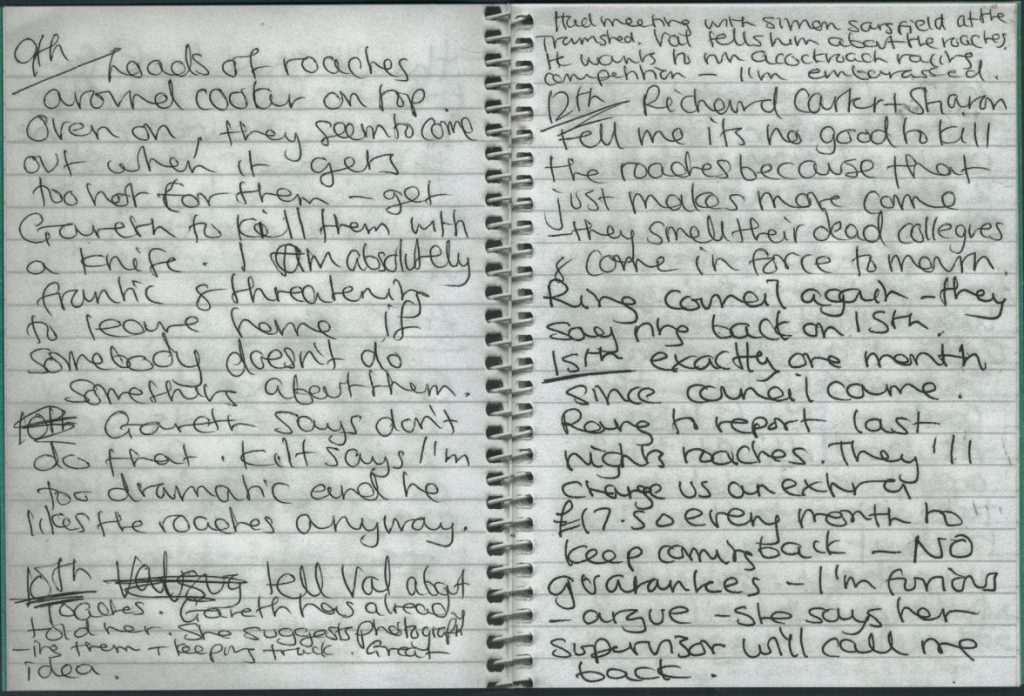
There seems to be some obvious camera shake in the above image, yet this doesn’t seem to deter from the impact or quality of the shot. It perhaps adds to the sense of frustration of the subject (who is the real subject?) and the quick movement of both pest and person.
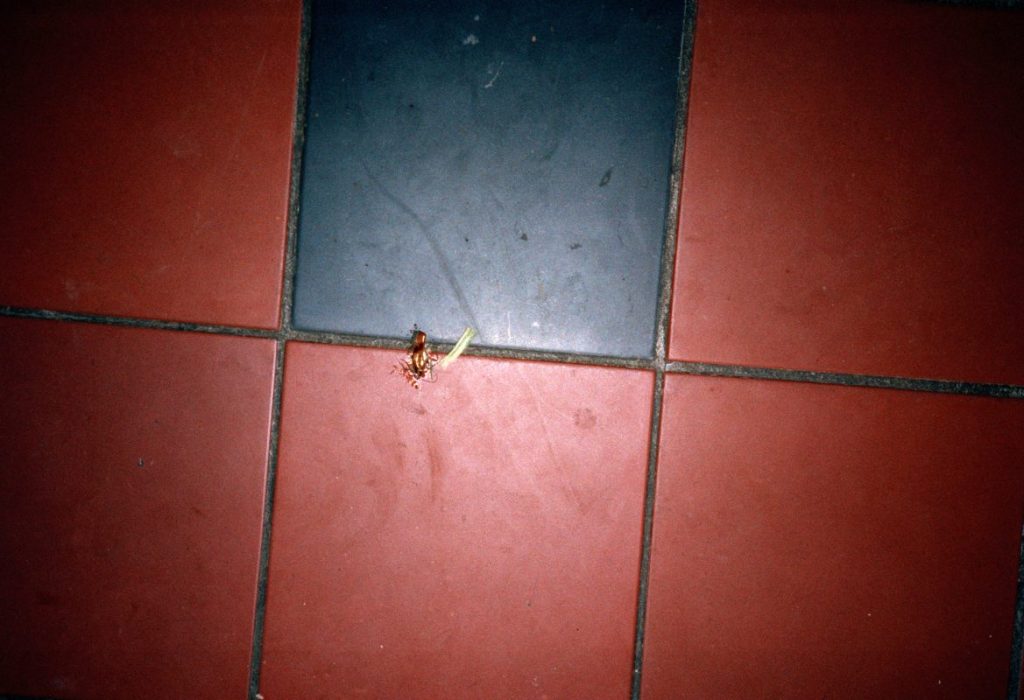
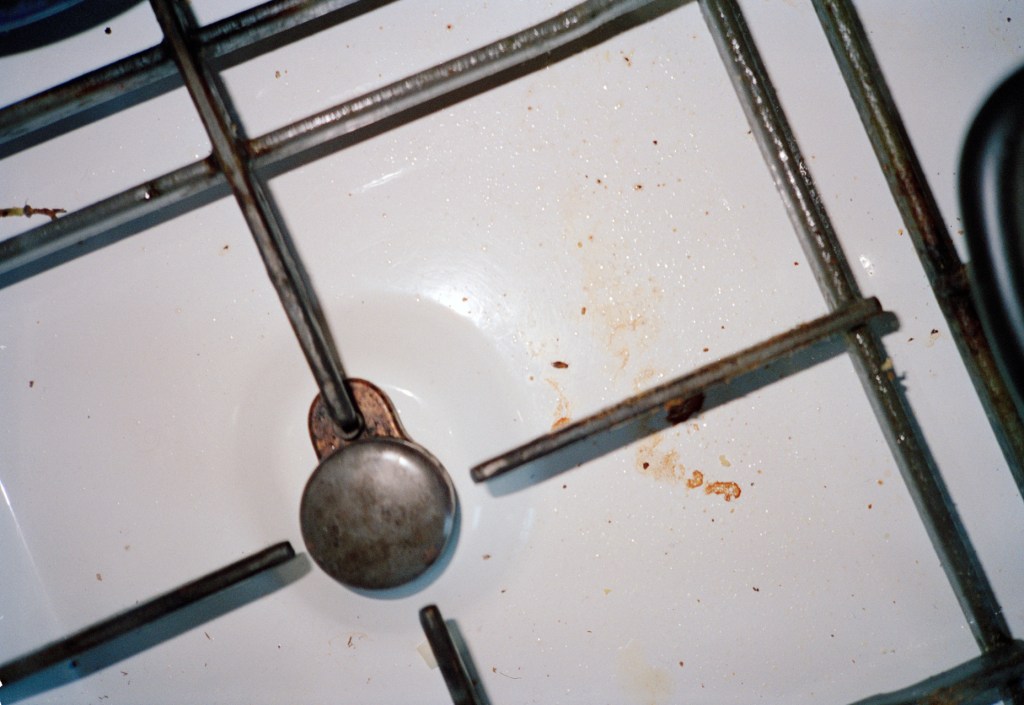
An unflattering overhead shot adds drama to the scene of the unfortunate cockroach. Negative space and quite a heavy vignette seem to draw attention (and a grimace) from the viewer.
References
Reference – (ONLINE) – Anna Fox – https://annafox.co.uk/photography/cockroach-diary/ (last accessed 22/6/20)
 Dan Towell OCA Context and Narrative