I had a chat at the weekend with an old friend of mine and we discussed various things, nothing overtly interesting due to the banality of lockdown, We have both been furloughed for a long period and this is reflected in not having much to do as becoming routine. After listening to the recording of the conversation, I sketch booked some ideas and thoughts.
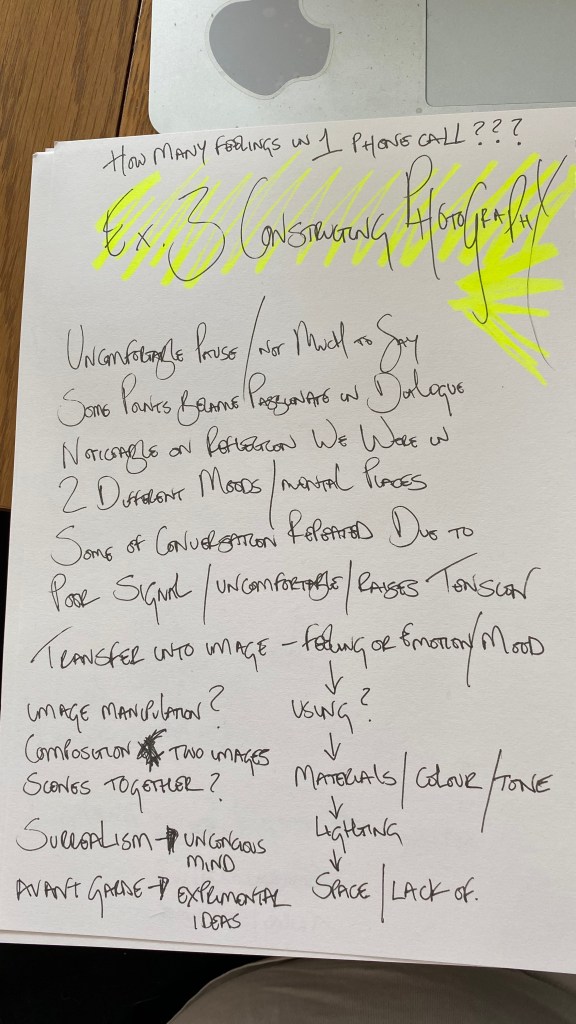
Reflection
The first thing I would take from this conversation and many others I have had in the past, is that largely the combine two different moods. I think this idea is heightened because the participants are not “face to face”, so largely the empathetic value is lost or (can be) misinterpreted. The mood of or feelings of the person you are in dialogue with is largely interpreted by the tome of voice, this inevitably leads to it being misconstrued, as you or they have no facial or bodily functions/mannerisms to back up their speech. A dull sounding voice may be due to tiredness, yet the listener may assume that, “he/she didn’t want to talk”. Ultimately it becomes minefield for miscommunication and largely I find only when the subjects are discussing something that involves them both, does the conversation really become more parallel in emotion. Below is a bullet post list of things that I picked up on listening back to the conversation.
- Uncomfortable pauses / moments of not much to say
- Some parts of the conversation became more passionate / emotive than others
- Noticeable that our wording / phrasing / use of sentences portrayed a different mood / mental space
- In some instances poor signal led to miscommunication / this adds tension to the conversation / unwanted tension
- Heightened connection when discussion involves both parties at the same level.
How these ideas or reflections could be interpreted into a photograph is perhaps a difficult one. At the end of the day these findings are largely connotations, they would not theoretically be the sign within the image, only the “signified”. These feelings evoked in the spectator would largely be in the hands of the operator. The operator could evoke such connections by use of props, makeup, setting, lighting, tone, colour (or lack of), expressions, materials and space (or lack of). These are the tools that an operator of a photograph has at his or her disposal and has the opportunity to use in differentiating levels of poignancy and magnitude within the frame.
From a slightly more digital perspective, image manipulation and or compositing of images could be used to reflect the feelings associated with a two way phone call. This could lead to a much more avant garde method of photography which may or may not be linked to surrealism, the directions in which this could be taken seem relatively endless. The associated connotations will ultimately be suggestive and who could be wrong in their assumptions, the operator or the spectator? Their must be a level of careful planning to construct images with a more hidden aesthetic or narrative, and this is definitely in the hands of the operator. What becomes more apparent is the need to do the spadework behind any photographic project for it to be deemed largely successful by both.
 Dan Towell OCA Context and Narrative