Nikki Lee
Looking at the work of Nikki Lee I again find it quite amazing how she has come up with such a brilliant idea. Photography aside it is a fascinating way of seeing and feeling what it is like to be someone else. A brave and inspiring approach to art that is particulaly evocative.
Could the work of Lee be deemed voyeuristic? Well, I would say absolutely yes, but this could only be clarified by definition of the photographer themselves. When adopting anything new in terms of behaviour or outlook, the likely catalyst is wanting to feel something or be something new or different. This is my mind is essentially want voyeurism is, it is only the extreme end of the voyeuristic scale which could be perhaps perceived as dangerous.
Is the work exploitive? No, I don’t believe so. They are a representation of humanity and the many characters that are prevalent in society. In most cases all of these groups have been exploited, but they are not necessarily damaged by it. For instance, has the portrayal of Lee as an old lady exploited the nature and value of the age group? Is it making fun of the subject? Personally I don’t see comedic value in these images, more a direct depiction of how it is. I would assume that Lee has used her art as form of expression that gives licence to Gai a deeper understanding of what is is like on the “other sides”. Personal value most definitely but also an opportunity for us to digest the idea of what we are and how we fit into the social and cultural box as it were.
Perhaps Lee is commenting on her own identity, but for sure she is commenting on the identity of the group, otherwise the images would have nothing to say. Some stereotypical some not, but we have a preconceived notion of these different groups, but they serve to highlight their place in our timespan. This is this group and this is what they look like, in most basic terms. Perhaps Lee is saying this is what I can do, I have the power to be someone else. Perhaps she is lauding the camera and the ability it gives to transport the voyeur into new uncharted territory. I would likely say it is a bit of both.
It is also interesting to note that Lee used a basic point and shoot camera for this set for the certain aesthetic feel it produces. She also had her image taken by friends or associates who were not professional photographers as this was how the wanted to portray the pictures and narrative.
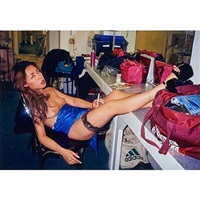
Nikki lee here adopts the persona of an exotic dancer, brilliantly playing up to the stereotype that would spring to mind when we think of these small and underworld type dressing rooms. Exposed breasts, cigarette and a matter of fact pose slumped back into a chair suggest a busy night was had, and many tips from middle aged husbands on secretive nights out (possibly…)
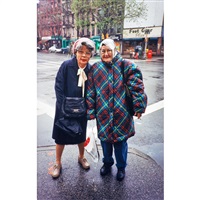
Here Lee takes on the appearance of an old woman, accompanied by another elderly lady. This really completes the scene as I don’t think that Lee on her own would have carried quite the same message. Gripping each other by the arm suggests friendship, loyalty and companionship, morals that are not overlooked by the older generation.
References
Reference – (ONLINE) Nikki Lee – http://www.artnet.com/artists/nikki-s-lee/ (last accessed 20/6/20)
Reference – (ONLINE) Nikki Lee https://www.youtube.com/watch?v=oI8xpJItPVI (last accessed 20/6/20)
Trish Morrissey
Another quite intriguing, thoughtful d inventive idea to facilitate loosely the medium of self portraiture. It is apparent to me know that there are many ways in which the photographer could explore this theme and Morrissey here shows another captivating look into the candid nature of appearing as someone else. Here Morrissey approaches complete strangers and composes scenes where she doubles as a member of the unsuspecting family. A brave and confident approach I am sure was needed to interact with families that she did not know, but she obviously found some willing participants. It is also worth noting that Morrissey framed and composed the shots caqrfeullu and was the author and subject within the shots. I would assume the role of the person whom she took over their identity was directed to push the shutter at the appropriate time.
Such an unusual set of circumstances could only provide such results, one would assume, the impact that this situation had may have directly affected the content and character of the images. There is some noticeable tension within the shots, stiff posture, no smile or more of a grimace and sometimes what seems to be a lack of interest. That being said other “actors” within the scenes appear much more naturally and add the aesthetics and character that again would be assumed Morrissey intended. Maybe she wanted this clash of psychological tension, again using the camera as a tool to portray those days at the beach we so often remember as being so idyllic, but are often filled with family argument, tired travellers and sunburnt parents.
Below images are for artistic reference only.
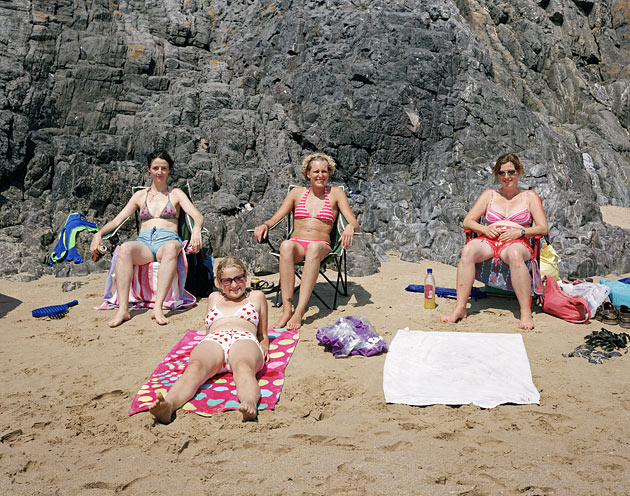
Perfectly exposed and composed here with four ladies pictured, but the key is that one is laying down. This helps to draw the eye around the frame and take in the whole scene.
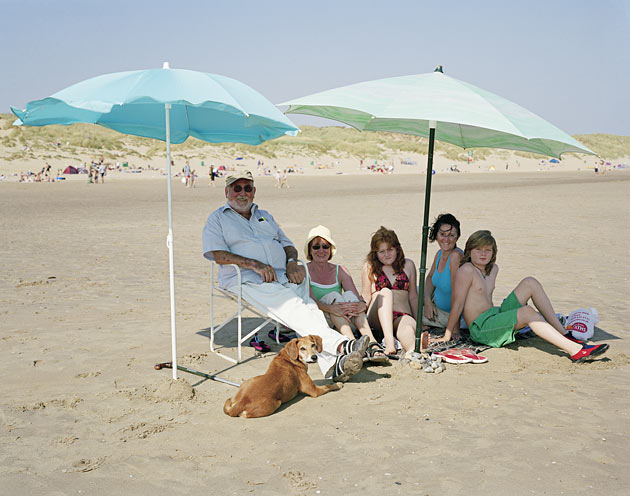
Subtle detail here adds depth to the image, but perhaps the most striking aspect is that the dog is looking at the camera also. I wonder how the lady behind the camera feels when she traded places with a complete stranger.
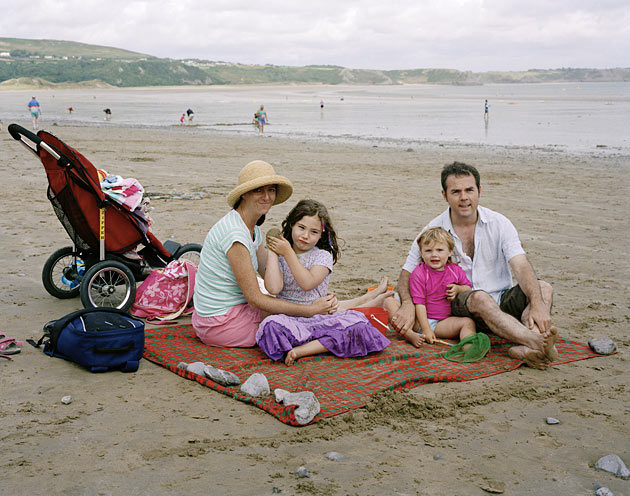
This image could not be more realistic in terms of content, and it is interesting how her looking back at the camera adds to the motherly ethic being portrayed as she places her arm around the (her) child.
References
Reference – (ONLINE) – Trish Morrissey –https://www.trishmorrissey.com/works_pages/work-front/statement.html (last accessed 20/6/20)
Reference – (ONLINE) – Trish Morrissey – https://www.trishmorrissey.com/works_pages/work-front/workpg-05.html (last accessed 20/6/20)
Reference – (ONLINE) – Trish Morrissey – https://www.trishmorrissey.com/works_pages/work-front/workpg-04.html (last accessed 20/6/20)
Seven years
Seven years is an exploration into the family snapshot and Morrissey stars in the series alongside her sister, with how she shares a seven year age gap. They both undertake a variety of roles within the images, and use periodic clothing and props to picture scenes from the 70’s and 80’s. In the images they play different roles with in staged scene, sometimes sister, sometimes mum, sometimes dad. Whilst I see the images as a catalogue of excellent photography, from lighting to props to composition, I do struggle as the viewer to comprehend the narrative within the set. Are they comedic? Are they serious in nature? Are they a means of recalling good/bad memories? Are they a dialogue recounting how Morrissey and her sister grew up? Perhaps it is all of these, and as most of Morrissey’s work she accompanies the sets with a statement which aims to clarify the intention or nature of the images. In this case it was also the set aims to depict the psychological tensions that are all part of family life and often overlooked when browsing the family snapshot album. Maybe Morrissey is asking the viewer to think more closely when looking back at these pictorial artefacts and one could be rewarded with a greater understanding of his or her own family. What we garner from this body of work could be subject of much discourse, and it does open up quite a debate. An intriguing look into how self portraiture can be adapted and stylised in front of the camera lens.
The below images are for artistic reference only.
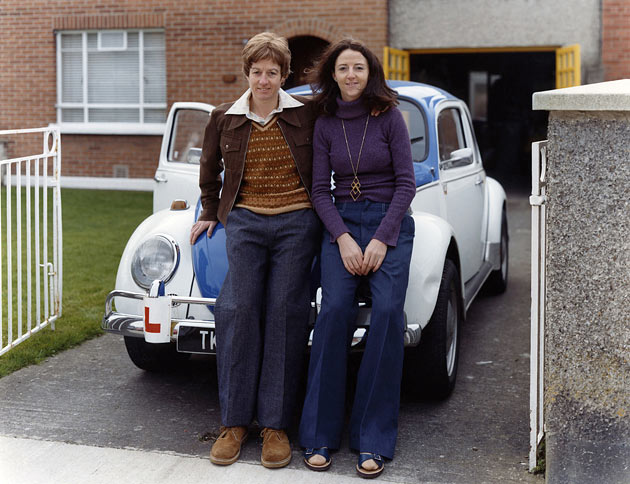
An interesting image above seem to highlight that landmark teenage event of the first car or the first driving lesson. The relaxed demeanour of both of the individuals within the frame seem to help convey the feeling of freedom, calmly resting on the bonnet on the car, happy, yet seeming optimistic as to what the future holds.
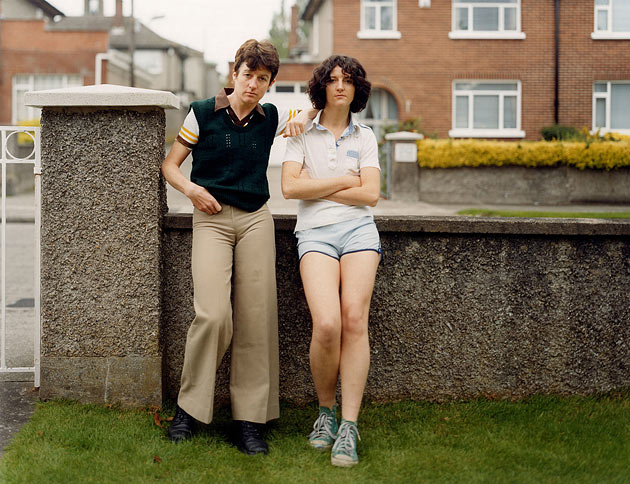
A much more tense image here and very much in sharp contrast to the first image. Whilst the individuals still casually rest against the wall, their demeanour is somewhat different as hand in pocket and arm on shoulder suggest angst and rebellion. It has an definite air of “what are you looking at”.
References
Reference – (ONLINE) – Trish Morrissey – https://www.trishmorrissey.com/works_pages/work-sy/workpg-08.html (last accessed 20/6/20)
Reference – (ONLINE) – Trish Morrissey – https://www.trishmorrissey.com/works_pages/work-sy/workpg-11.html (last accessed 20/6/20)
Reference – (ONLINE) – Trish Morrissey – https://www.trishmorrissey.com/works_pages/work-sy/statement.html (last accessed 20/6/20)
The failed realist
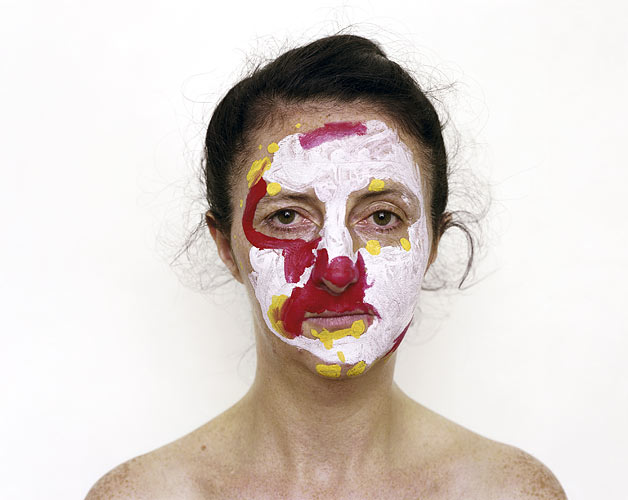
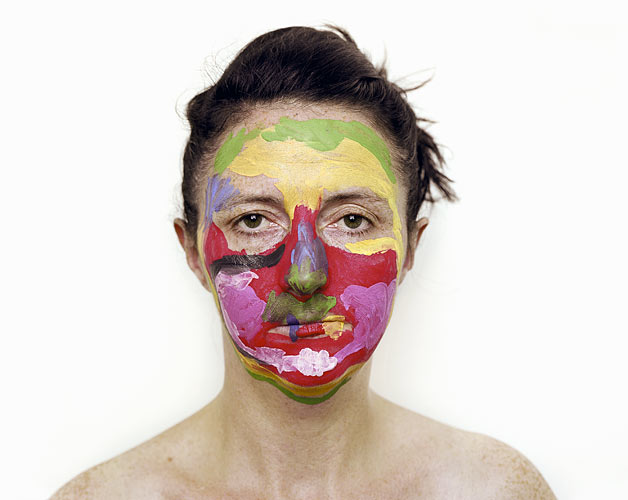
Again another very interesting body of work which explores the theory that between the ages of 4 and 6 children are more verbally articulate than visually. This means the way they interpret things such as films or book through art or “mark making” may through up unusual responses, which could in turn be interpreted in various ways. This is something I had though about, my children are 10 and 7, and I always found it slightly fascinating what they actually put down on a piece of paper or canvas.
Morrissey chose to use face painting with her daughter between the ages of 4 and 5 to diarise and interpret this idea. It is interesting to see that the Morrissey uses the same composition and lighting within the set. Looking at the shots I would personally say she has used two lights either side to light the scene and cut out any unnecessary shadows on the scene and in particular face. This would detract form the forms which has been inspired by immediate experience such as vivid dreams, social events or a particular movie. It is the response to this events that form the spine of these sets of images, with the obvious intention of getting a greater understanding of how the creative mind works as this tender age. Often the paintings will be quite quirky, happy go lucky even but in other cases they seem to take on a more sinister form which could be argued in terms of intention. An interesting body of photographic work.
The below images are for artistic reference only.
References
Reference – (ONLINE) – Trish Morrissey – https://www.trishmorrissey.com/works_pages/work-tfr/statement.html (last accessed 20/6/20)
Reference – (ONLINE) – Trish Morrissey – https://www.trishmorrissey.com/works_pages/work-tfr/workpg-07.html (last accessed 21/6/20)
Reference – (ONLINE) Trish Morrissey – https://www.trishmorrissey.com/works_pages/work-tfr/workpg-11.html (last accessed 21/6/20)
 Dan Towell OCA Context and Narrative