Cut out some pictures from a newspaper and write your own captions.
- How do the words you put next to the image contextualise/re-contextualise it?
- How many meanings can you give to the same picture?
Try the same exercise for both anchoring and relaying. Blog about it.
Newspaper analysis
I used the Daily Mail to cut out a selection of images which I used to add new captions. Pictures below from my sketchbook. I often use my sketchbook for this type of exercise and still enjoy the freedom of pen and paper in the digital age.
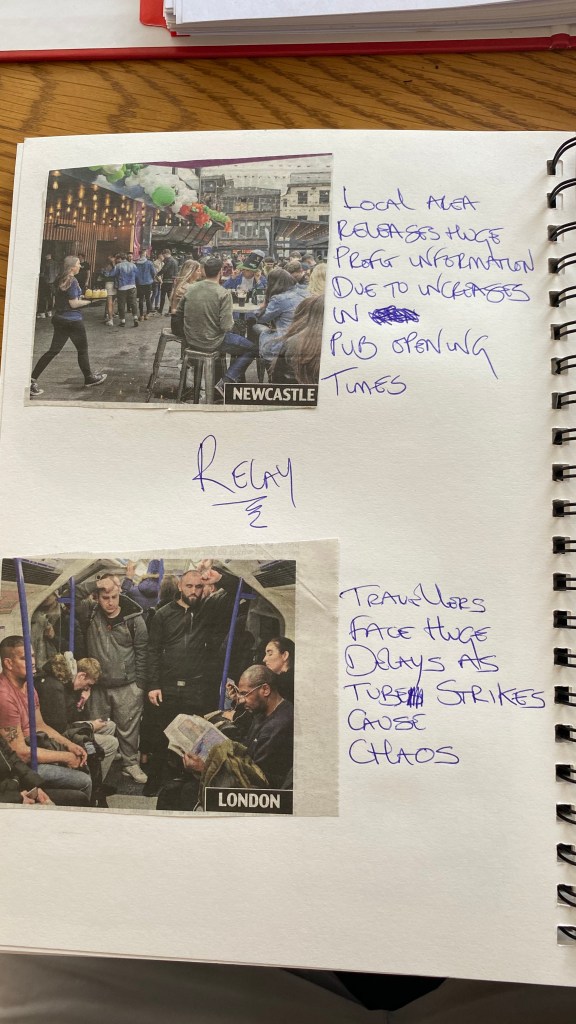
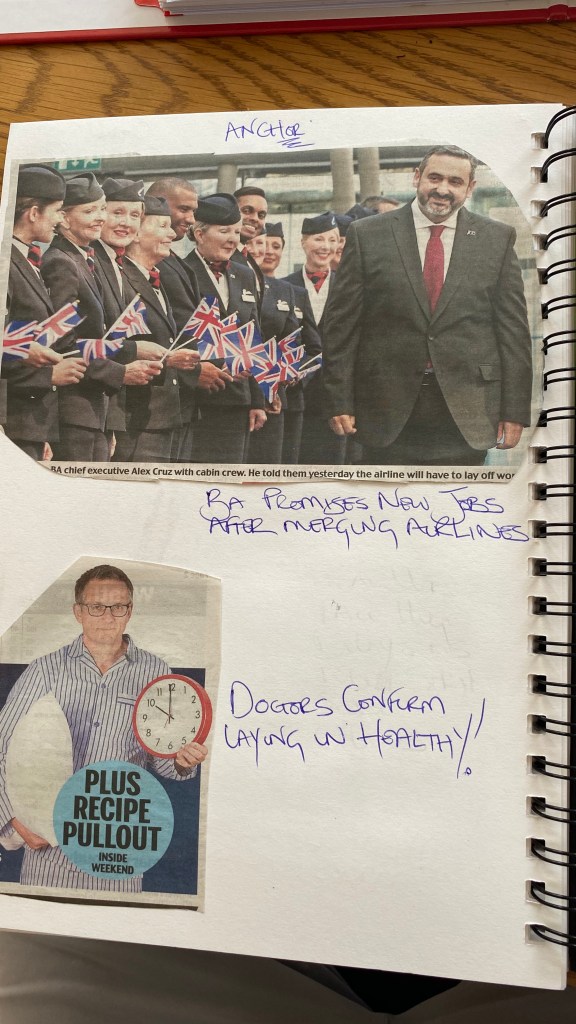
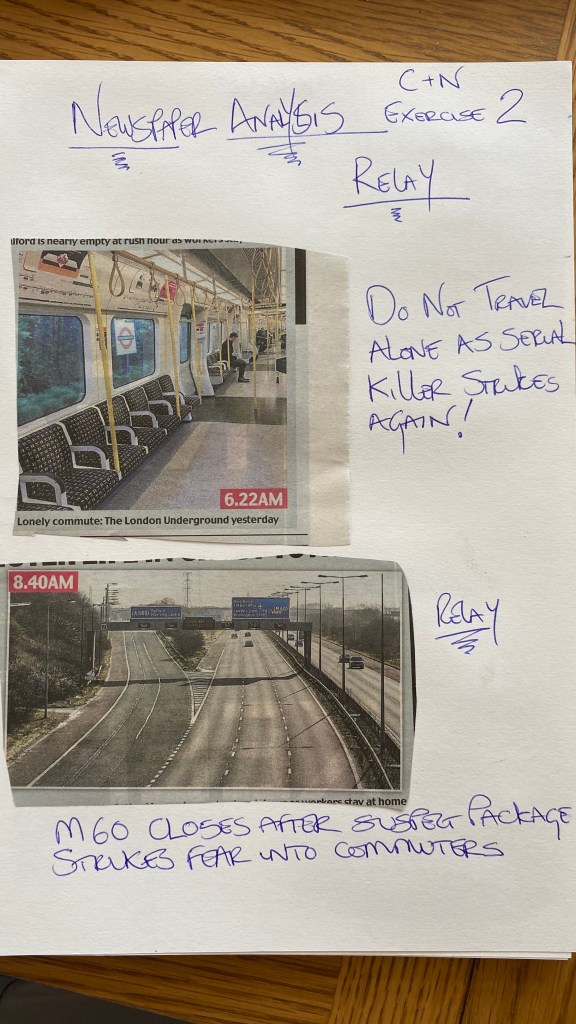
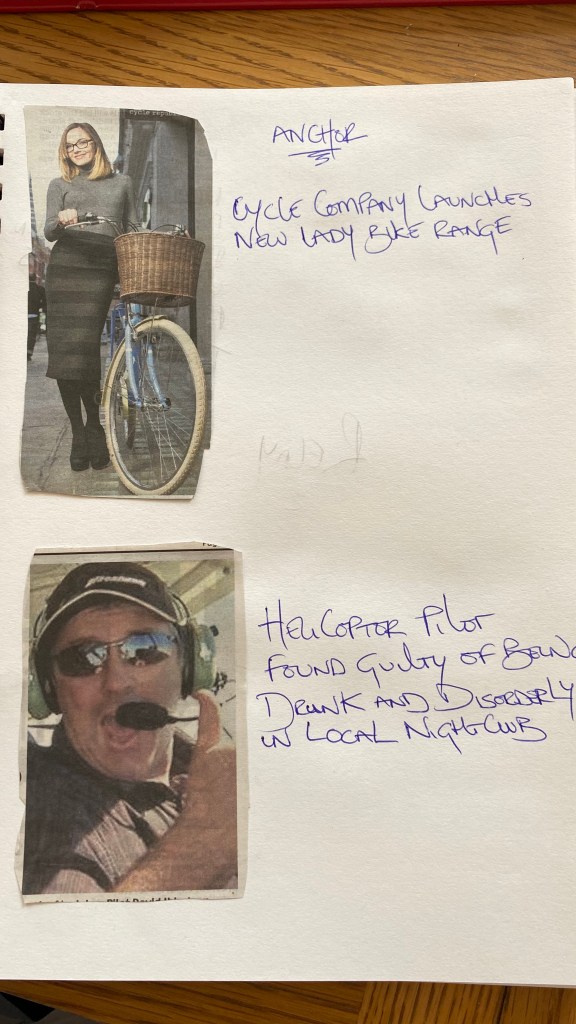
Firstly to my mind the captions or meanings you could give an image seem almost endless, it is only the use of an anchor or relay that alters the way of thinking to produce a different meaning.
Relay
When adding a caption with the intention to have an equal status with the image, I felt the wording must be much more descriptive and almost mirror what the image is saying. This would yield more power if in the instance an image was put into a context where it was depicting something that had a relay meaning in mind. If a tragedy occurs or a murder in a small town for example, then it’s likely that certain pictures are chosen by newspapers to anchor the story of relay it. The image has to be more descriptive and almost tells the whole story of the event it is readying, then the words that are alongside it do the same. A relay style image would perhaps not need any other information than its accompanying text, giving the viewer the whole meaning behind its context.
Anchor
When anchoring an image I feel that the image only partly tells a story, a snippet if you like of a bigger picture that will be described. The anchor caption also does this, just giving a certain amount of information where the interested reader would have to digest the news story that accompanies it to find out the full story. Anchor style images can be much more freely chosen depending on the context for which it is intended, it seems to be easier to anchor an image rather than really it, as the meaning is less ambiguous.
 Dan Towell OCA Context and Narrative