Research
I began searching online to look further into the term “citizen journalism” and have to admit that I had not come across this before. I had obviously encountered it through social media, news etc, but had not heard of this terminology. It strikes me as being very 21st century where we like to label and hashtag anything that seems to catch on with the general public. A very interesting topic nevertheless and creates much discourse regarding its objectivity within photography. Below is a screen grab of an image I choose to dissect further in a bid to better understand its context within the medium of photography. It is reproduced purely for artistic reference.
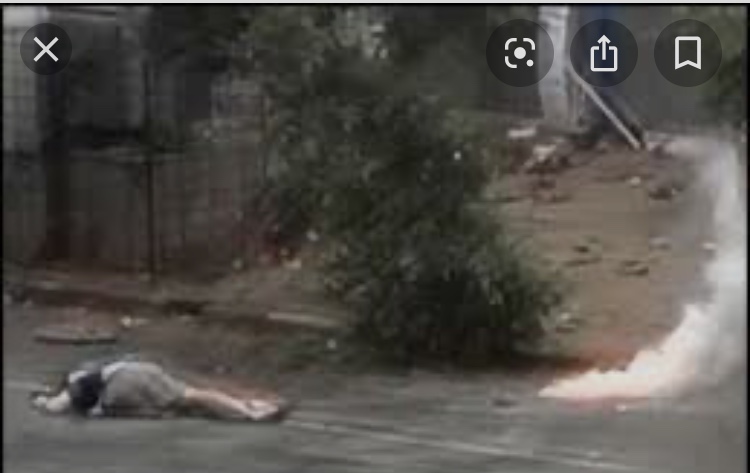
A very graphic image to say the least and one that was captured during the Burma protests in 2007. Without dwelling on the protests to much, I found that they were part of anti government campaign, triggered by the decision of the military government to remove subsidies on the sale prices of fuel. This led to the Burmese troops cracking down on the demonstrations, ultimately paying the price for their heavy handed regime whilst people and civilians alike documented the resulting conflict. The image itself is a still frame taken from a video released buy the Democratic Voice of Burma. The Burmese government did not want publicity for the demonstrations and blocked the entry of journalists from around the world into the country. Firstly and fore-mostly the image(s) document the reality of the journalistic struggle that took place to report on the protests. The person laying injured on the floor is a journalist who was covering the events as the troops opened fire on the demonstrators. This picture amongst many others that were published, highlight the harsh reality the people of Burma and journalists found themselves in. The ensuring clashes had not been quite so easily captured in the past and this in itself led to the widespread closure of the internet by the Burmese government.
Reference – (ONLINE) https://www.ctvnews.ca/burma-s-government-tightens-information-access-1.258056 (accessed 03/03/20)
Notes
Objectivity
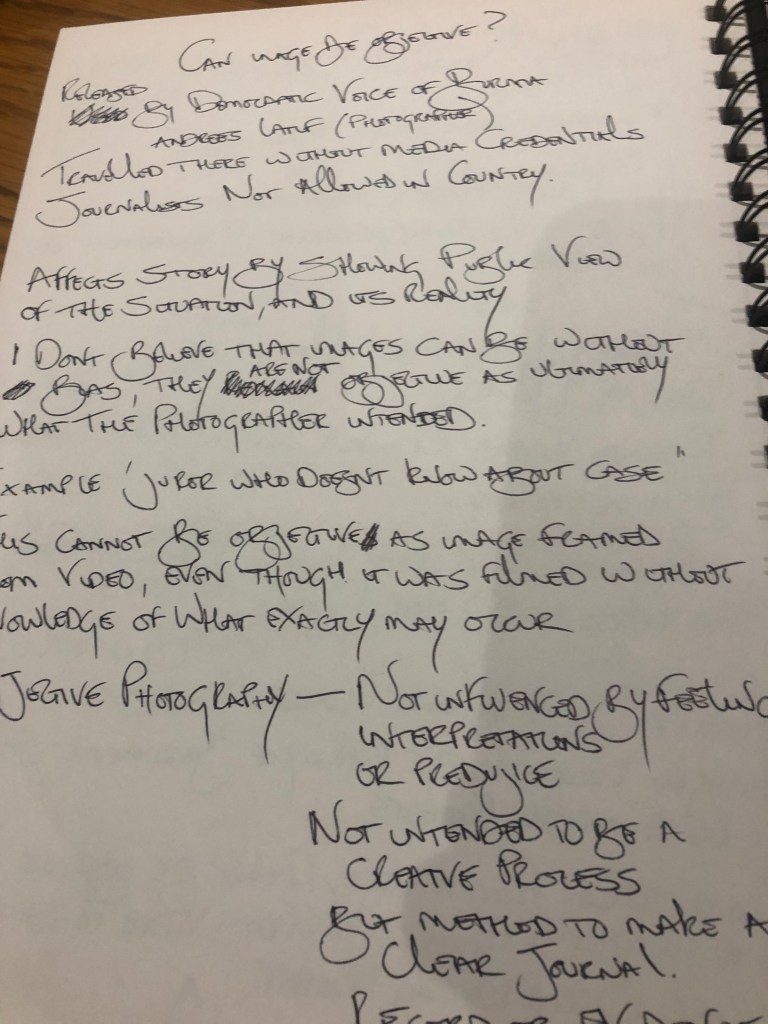
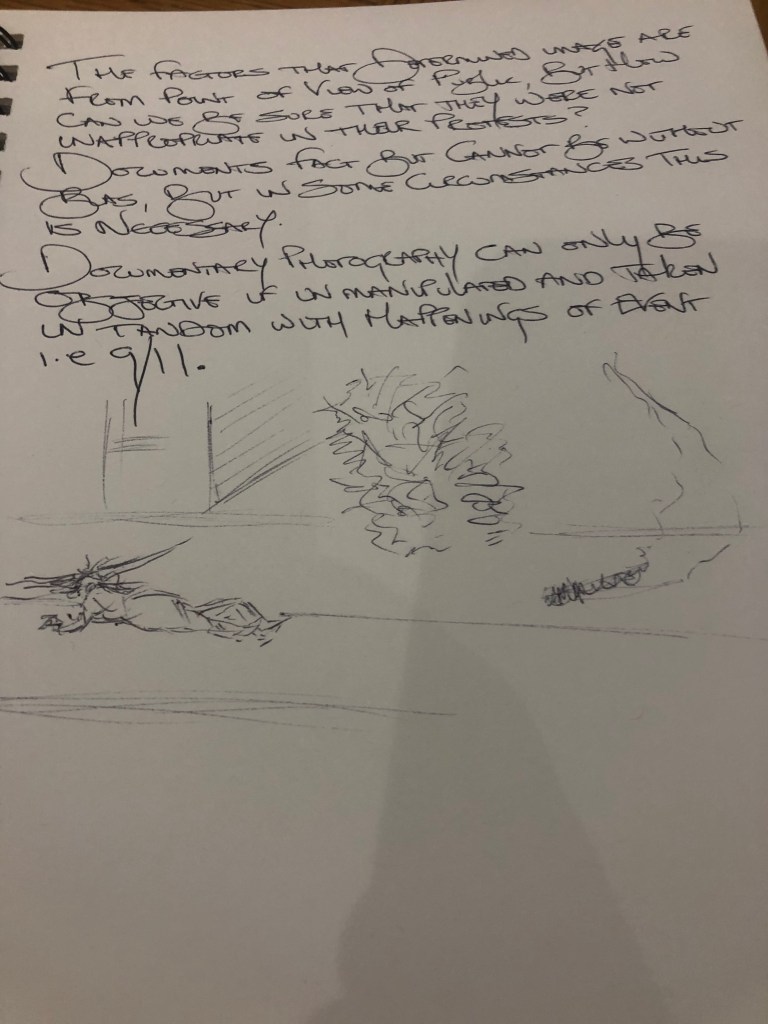
From the perspective of looking at this image in particular, it seems unlikely that it is purely objective. The image was framed from a video released by the Democratic Voice of Burma, and to my mind cannot be completely unbiased. Yes, the image documents the horror of the events, but contextually it is propaganda in favour of the people of Burma and shows only one side of the story. We can only surmise as to what led the troops to open fire, unless of course we where there, and this is not evidenced within the image. Perhaps more information could be gathered from the video itself to prove the other side of the story, but for the sake of this argument, I am not taking this into consideration. I would personally like to add that I wholly support the Voice of Burma, and can only agree that this abuse of power was utterly wrong. It certainly looks as though the government had much to hide from the reporters and journalists, let alone their own people. The fact that many people lost their lives in order to document the protests will be eternally etched into the archives of citizen journalism. The objectiveness within the image can only lie in the act of taking the actual footage, with ultimately the journalist would not know athletes he would end up shooting, and in now way could this particular image be staged or posed. But can we also be sure that it was not manipulated in any way, it another instance could a journalist/civilian be “tipped off” and lay in wait for the events to unfold? Could this be then classed as objective or not? I genuinely feel that an image could perhaps be objective, but it has to analysed on its own merit, circumstance and context to unfold its true meaning, subject and objectivity. To my knowledge and image can only be taken in an objective manner, but from the on its objectivity can or could be lost in the external context that it is portrayed. An example of objective documentary photography could be 9/11, where the images are taken in tandem with the occurrence of the event. Unexpectedly and unwittingly civilians are in a scene that is being played out in real time, with no preconceived relevance or information. To me this is purely objective, but as soon as the images or footage become a journalistic tool, objectivity is lost in the context of how it is published. This type of imagery documents fact, but in many cases citizen journalism cannot be without bias, although as in the example of the 2007 Burmese protests, it is certainly necessary.
Objective photography
I wanted to explore in more depth the meaning of objectiveness within the medium of photography. I found some quite interesting results, which have led me to see this type of imagery in a new “light”. To be wholly objective, an image should not be influenced bu feelings, interpretation for prejudice. It should not be part of any creative process, but only a method in which it forms part of a truthful journal of events. Its nature should be one of documenting or evidencing something, events or otherwise based on fact. Taking all of this into consideration, the objectivity of an image will always be questioned, particularly in the medium of documentary photography. There will perhaps always be a grey area in the argument for and against the theory of pictures ever being objective, and cant see this ever being changed. This will rumble on for many years, and as we delve further into the digital age, the creative process of taking and publicising images becomes more and more entangled in day to day lives. Never before was time when photography and editing materials so readily available to “Joe public” and his dog. And I can only see the widening of this grey area continuing for the foreseeable future.
 Dan Towell OCA Context and Narrative