I took the opportunity whilst out with the family to take some shots whilst on a picnic in Barton on Sea, New Milton. I have recently (reluctantly) traded in my 150-600mm sigma lens for a 24-70m sigma f/2.8, which I wanted for versatility and to develop my food photography. Whilst I loved the lens, I could not afford to keep both so it was a case of having to let the 600mm go. I must admit I did struggle with the weight of the 600mm lens and I was never 100% happy with the image quality or versatility. Although I believe this was more down to me than the lens itself. I also find myself more interested in areas of photography that do not require this type of lens. I was keen to take out the new (2nd hand) lens paired with my D800 and thought the locality by the ocean would be the ideal opportunity. I did not take any filters with me as I was not going to be doing longer exposures due to it being a family outing in the middle of the day. I knew it would be fairly busy with people so I thought best to keep it relatively simple. In hindsight I needed a polariser and a uv filter (one I have and have purchased a relatively cheap UV filter if only to protect the lens better) to cut out glare etc. Whilst the beach can be a great location for images, it can also prevent quite a few challenges in terms of composition for one and sunlight for another. I am drawn to landscape photography and would like it to be an area I further develop. Whilst Barton on Sea is a beautiful area, it doesn’t perhaps present the dynamics for great landscape images. Sparse landscape can provide a challenge and I was initially quite baffled as what to actually photograph and how. After taking a few snapshots of the sprawling landscape, I decided the I wanted a large depth of field with as much detail as possible. This led me to look at the scene more closely and analyse what I had to work with. Three things struck me initially, one the vastness of the space, tow the huge rocks by the water and three the wildflowers that were just starting to blossom. I knew these would be the main areas of my compositions and a good base to build the images. After a few snapshots and the lack of filters, I thought why not try some bracketing to later merge into HDR images. It gave me an opportunity to experiment in camera and in process. I knew I wanted detail and I knew that a single exposure may present challenges due to the harsh light and lack of filters. I thought that having 3 or 5 frames to merge would help me expose for the highlights and shadows, and I find darker images easier to draw out detail rather that over exposed shots. I had the basis for which to take my shots, not all of which worked successfully, but provided a great challenge compositionally rather than technically.
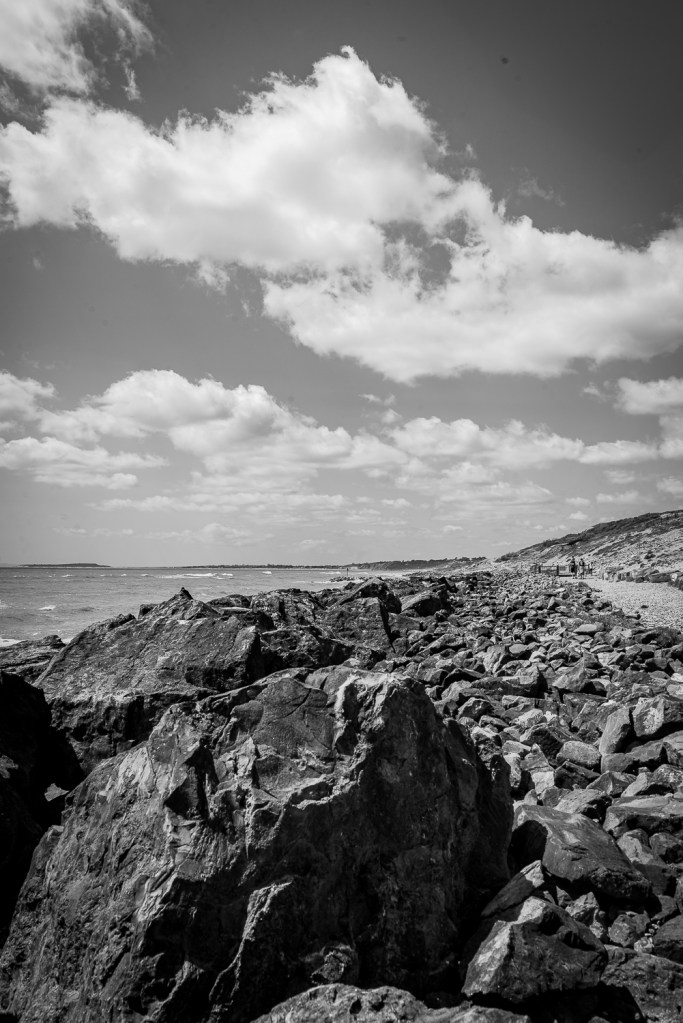
This was the first edit of an image I liked with a nice foreground leading the eye into the seen and out to the sparse landscape. It is 5 frames merged and edited in lightroom. I have become more aware three things when taking landscape images which I feel are quite important. Foreground, subject and information. All are of equal importance and they all need to be apparent in the scene. By this I mean an interesting foreground that has detail and depth, as I find that as a viewer this is point that draws my eye to to the image. Secondly there has to be a subject, a piece of the frame that is perhaps the “hero”, for example a lighthouse, a tree or a boat. It may not be prominent in the frame, or large in size, but its where the image leads the eye to, a final destination almost. Thirdly, information. Sometimes this can be a lack of information that is just as powerful, but it need to be one or the other. There needs to be elements within the frame that compliment the subject and the foreground, creating a setting that ties everything together. This could be a scene of a lighthouse that has a few rocks in the foreground and nothing else but still water. But its this still water that would provide a feeling of clam and be the information that rounds off the scene.
Back to the above image and im sure what is apparent is sensor spots!! Yes it has become very noticeable that I have a very dirty sensor! With the use of a narrower aperture of up to f/22 this has become more and more visible! Sensor cleaning kit purchased and tutorial watched! I didn’t realise it was quite that bad, but quite a wake up call. Being preoccupied with editing the shots and merging them, I didn’t initially see the spots, believe it or not! It also took a vast amount of time with the healing tool to get rid of the spots. Lesson learned. Below is a retouched image of the above.
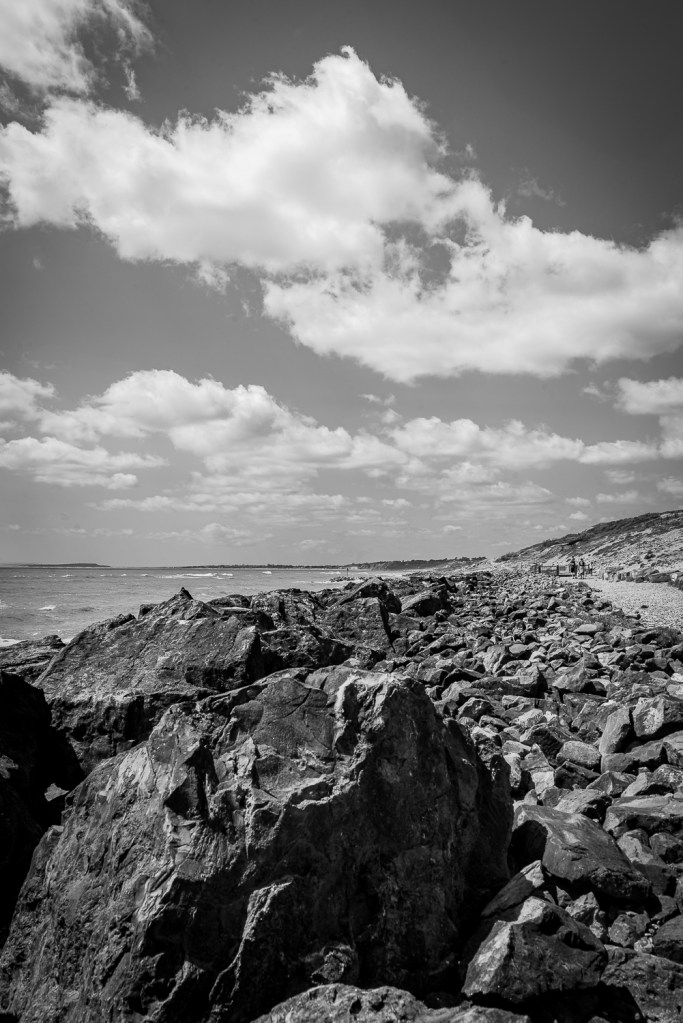
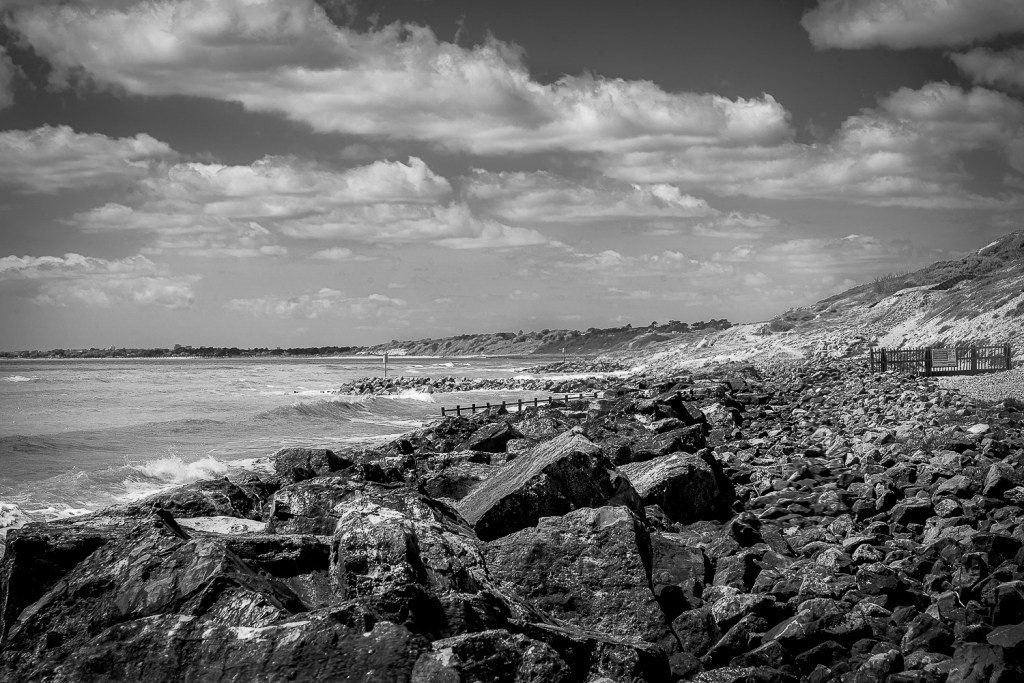
I do like this image, although it does perhaps lack a subject. But the saving grace is the vastness and the sky, both of which provide adequate information to finalise the scene. Also the family to the right of the image add to that feeling of open space as they disappear into the frame. Below is a landscape shot of the scene.
I chose to edit the below images in colour for obvious reasons.
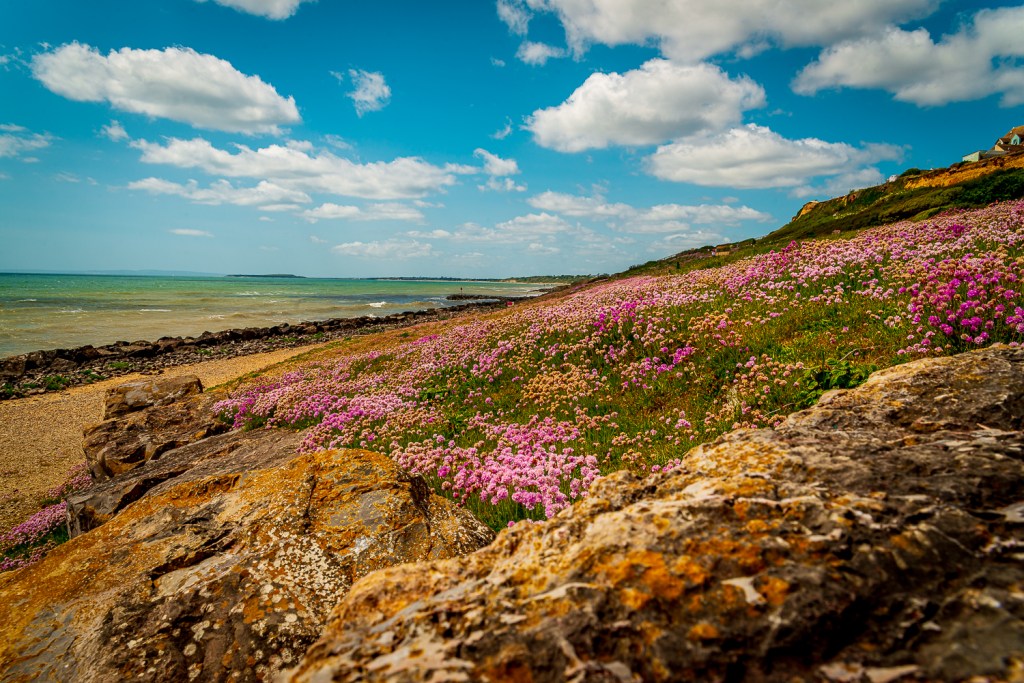
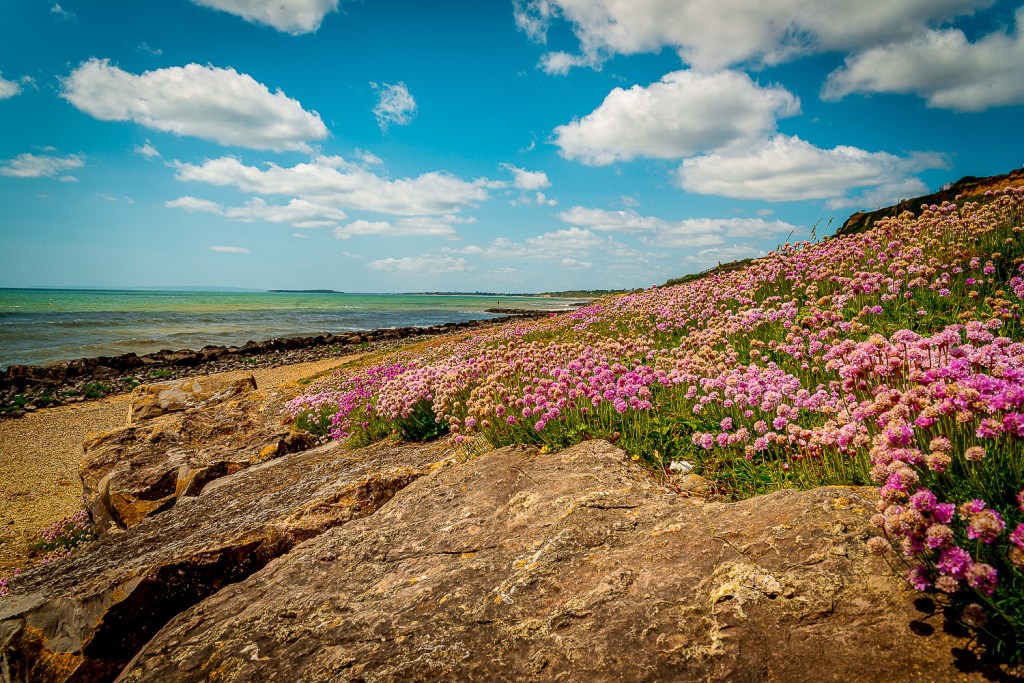
I also decided to use the abundance of wild flowers as part of my framing as I mentioned earlier. The two shots here are both HDR merged and processed in lightroom. Again I used an aperture of around f/16 fr detail > I suppose the issue here is movement in the flowers from wind etc, but I quite like image 2. I believe I focused on the horizon for theses shots and are 5 frames each. I feel image 1 is let down but the slightly out of focus foreground. I tried to draw out as much colour in the flowers as possible here but feel that if I revisited the scene in about a week the flowers would be perfect.
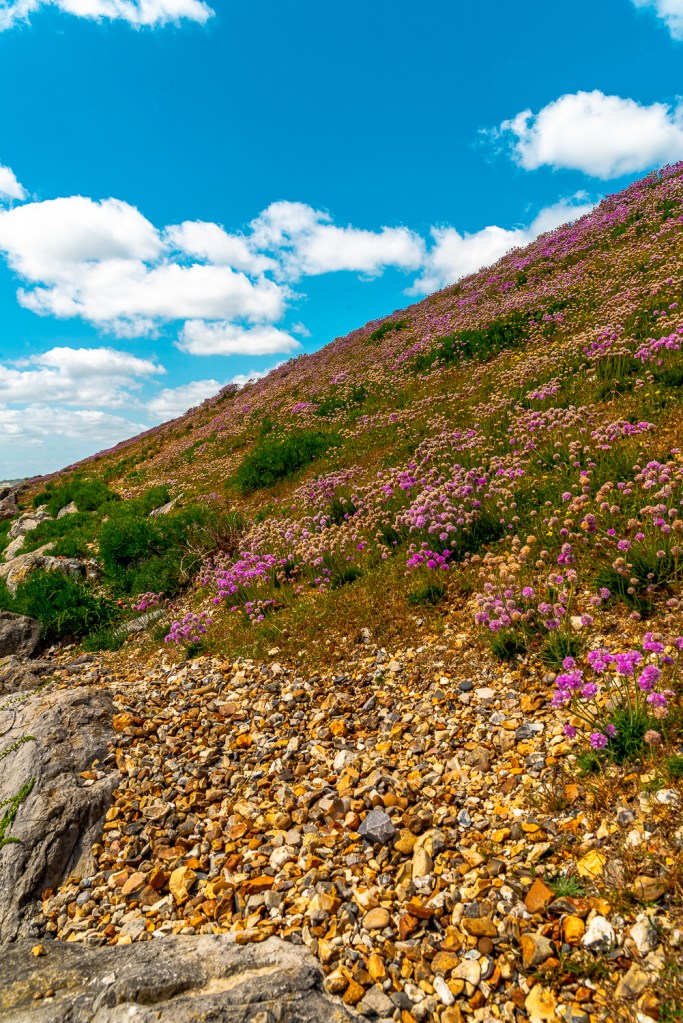
Lack of real subject here, a house on the hill or likewise could have provided that. Or the sun itself maybe, or even something to the left of the frame.
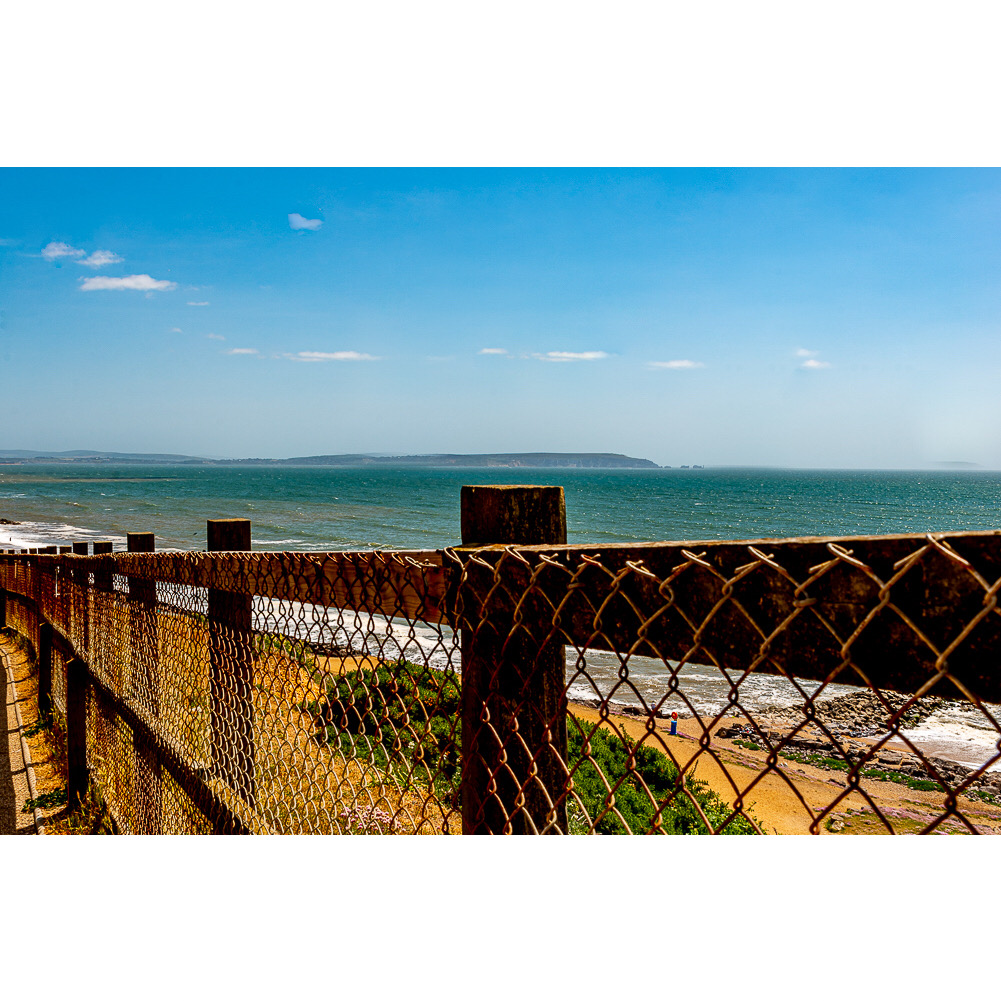
The below image was a single shot I took before the idea of bracketing some images occurred to me. I also added a white frame to this in photoshop for use on my instagram page. I like its simplicity.
 Dan Towell OCA Context and Narrative